March 18, 2026
The Role of Landing Pages in Assisted Living Marketing



In senior living, successfully converting a lead means more than simply making a sale.
It means seniors get the practical, social, and emotional support they truly deserve in retirement. It also means family caregivers get the peace of mind they need and the time to make precious memories with their senior relatives.
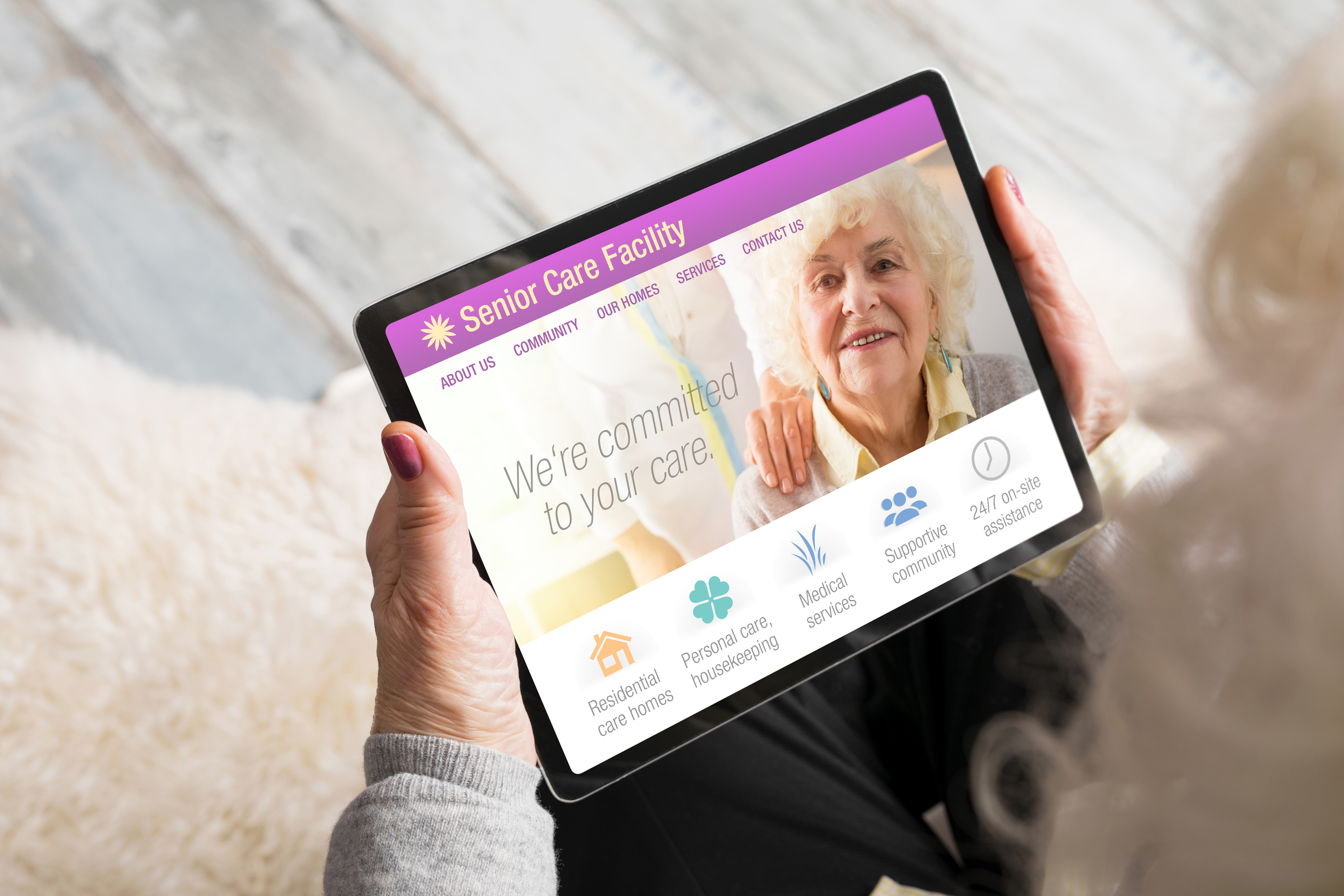
In the senior care industry, it’s not an exaggeration to say that a great website can be the first step in transforming lives.
It’s a common misconception that filling a senior living website with keywords is enough to attract leads, convert them, and get a good return on investment (ROI). In reality, it takes care, consideration, and a keen focus on quality.
SEO (search engine optimization) is optimizing your website to improve visibility in search engine results, such as Google.
GEO (generative engine optimization) is content optimization for generative AI software like ChatGPT rather than traditional search engines.
CRO (conversion rate optimization) focuses on user experience and aims to increase the percentage of website visitors who perform a desired action (e.g., booking a tour or sending an inquiry).
According to an article for MarketSplash,1 the top five reasons visitors leave a website are lack of contact information, poor design, untrustworthiness, slow loading, and lack of mobile responsiveness. Other common factors that drive leads away include poor content and difficult navigation.
Effective website development will improve SEO, GEO, and CRO, offering smooth functionality that helps retain visitors while showcasing your content's unique quality to search and generative engines.
A DBS Interactive study2 testing the speed of senior living websites found that more than three-quarters of the skilled nursing websites they randomly reviewed were ranked as ‘needing improvement’ or ‘poor’. With 40% of people choosing to leave a website that takes more than three seconds to load,3 every moment counts.
Various techniques can boost a website's performance, including optimizing images, switching hosting providers, increasing cybersecurity, and limiting HTTP requests. While many of these require input from a website development expert, the investment is well worth it; in their research, Bidnamic4 found that with every second of faster loading time, the conversion rate can increase by 17%.
As of 2023, 16% of people worldwide had a significant disability.5 For adults aged 60 and older, this figure rises to 46%.6 Therefore, an inaccessible website could shut out up to half of a senior living community’s target audience. Visual impairments caused by issues like age-related macular degeneration (AMD) and strokes are particularly common among seniors, affecting an estimated quarter of US adults aged 71 and older.7
Not only will a lack of accessible features like screen reader compatibility prevent prospects from finding your organization, but it could even give a poor impression of your values.8 Claiming to be an accessible community while having an inaccessible website may make you appear less trustworthy (which is also a top reason why visitors leave a website).1 A website promoting personalized care for seniors must consider the common barriers this demographic faces.
As a senior living community, your target audience may not be confident using the Internet. In fact, only 26% of American seniors feel ‘very confident’ using electronic devices9Therefore, clear, and simple design and navigation that seamlessly guides website visitors toward a desired action are vital for CRO. From a technical perspective, simplicity can also improve a website’s SEO rankings by making it easier for search engine crawlers to index content.
Mobile internet traffic is now almost as prominent as desktop traffic, with 43.09% of total web traffic in the US coming from mobile devices and 2.66% from tablets.10In 2024, a website design optimized for mobile access will be vital. Not only does it improve the user experience (leading to mobile users spending three times longer on properly mobile-optimized websites), but Google typically ranks mobile-optimized sites more favorably in search results.11
With website design, copywriting, and SEO experts working alongside experienced senior living marketing consultants, Scott Marketing and Consulting Group® will optimize your senior living website from every angle. Arrange a no-obligation consultation today to find out how we can boost your ROI with our signature personalized approach to website development, branding, and senior living marketing.
References
.jpg)